
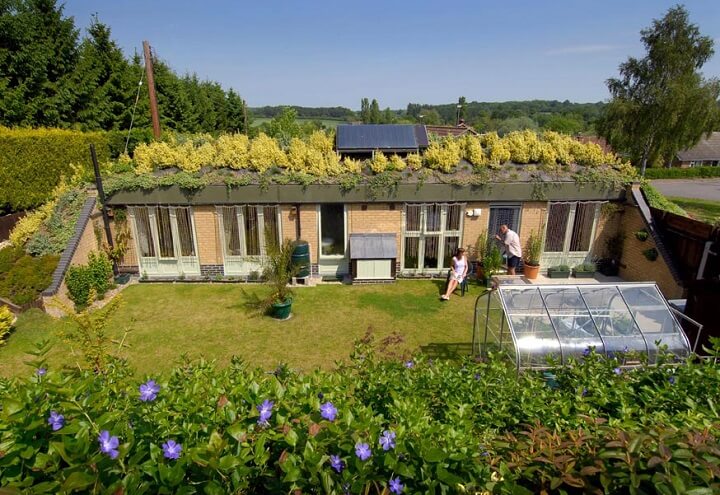
I once lived in an earth berm home that my husband and I built in North Carolina years ago which, naturally, was sustainable and very energy efficient. Constructed of steel and sprayed on concrete, or Quickrete, the dome-shaped house was insulated with thin, foam panels and the concrete waterproofed on the outside with a bituthene coating. It used the earth as a natural insulation for temperature control, therefore not requiring heat or air conditioning. Another option that we utilized was the southern exposure, which lent natural light and heating from the sun into the front of our house, especially since the other three walls were covered. It proved that an earth home doesn’t live by the stigma of being damp and dark inside. These are just a couple of examples of how to better design a structure with energy efficiency.
So much technology has been created in recent years to pioneer energy efficiency in homes and other buildings, and there are numerous methods of achieving it with some even functioning entirely off the grid. When I think of tips to design a building with energy efficiency, there are certainly multiple.
Solar
We see more and more homes utilizing solar panels on the roof because of its energy saving benefits. Solar panels take advantage of the sun’s natural light to provide power, and this option has been proven to be extremely effective, cutting electric bills to a minimum, which can offer a huge savings. Some people view the upfront expense of the panels as a deterrent, but they have proven to pay for themselves through saving money in just a couple of years.
Sealing & Insulating
These are seemingly obvious options, but many structures are surprisingly not constructed with sufficient insulation, and doors and windows are often not tightly sealed, letting cold air in and heat out. We especially see in older houses and buildings, where seals are cracked or missing completely and insulation was attempted with inefficient materials. Some older homes, like my grandparents’, had no insulation at all and many used newspaper and other materials.
Eliminate “Dead” Space
Nowadays, we see a lot of homes and buildings being built with high ceilings to make a small space look larger. Though the concept is smart, it can really run up the costs of heat and air conditioning. Many homes, while aesthetically pleasing, leave a lot of unused space, in foyers with high ceilings, for example. The more that these “dead” spaces can be used or eliminated, the more energy efficient the home or building becomes.
Green Building
Using the proper sustainable materials can be hugely beneficial in energy conservation. Some are using the earth for insulation and temperature control, others have used things like wool bricks, grass, recycled plastic, tires and even glass bottles in place of concrete walls. Triple glazed windows can also provide a valuable option.
Water Conservation
Many water-saving techniques are being used for better energy efficiency. One of the ways this can be achieved is by installing low flow water fixtures, which controls the flow of water usage, and it is a great way to conserve. In taller structures, another method is roof mounted water tanks for obvious reasons. The less distance that water has to flow through water lines, the more one can save on usage. In states that permit rainwater collection, rain barrels can be a wonderful asset for watering the garden.
Re-purposing
Re-purposing, or reusing, the various materials around us can provide a great benefit to a home. Often times, things that many of us throw away can actually be crafted into something else. For example, the wood from an old barn can be re-purposed for a fence or even furniture pieces, and we see more and more examples of wood pallets being re-purposed for furniture and wall coverings. Some beneficial assets can be found in scrap yards and recycling centers.
Lighting
So many energy efficient products are being made available now and one example of this is energy is in light bulbs. LED and fluorescent bulbs can bring energy costs down hugely while also conserving energy. A southern exposure
Appliances
Another creative way to conserve and create energy efficiency is by purchasing energy efficient appliances and there are many options, like water heaters, stoves, refrigerators and washing machines, that can conserve water and electric while also saving money through tax credits. The refrigerator is touted as one of the more energy using appliances but there are steps that can be taken oneself to make it more efficient. Aside from choosing manual defrost options and properly adjusting temperature settings, doing minor things like using the frigid winter temperatures outside to freeze and cool before putting them in the refrigerator or waiting until food is cooled before putting it into the refrigerator can actually save a bundle. Cleaning the coils twice a year and checking refrigerator seals can also be a great benefit.
These are just some of the ways to design buildings and homes with better energy efficiency, and much of it is also tax deductible. I believe that building with more sustainable and energy efficient methods are the future. Not only is it better for our wallets, it is better for the environment, as well.
As someone who comes from a family of builders and works in the construction and property management business, I have observed the notable differences between the construction methods. So many still believe in the techniques that have been utilized for years and years, but we are finding new and better ways to erect structures by engineering them with the natural materials that are all around us, like earth and straw, recycled plastic and stone. We see people reusing old barn wood and refurbished materials to incorporate into modern, sustainable homes, all while saving money in the process. I have always taken interest in how things are built, how they function, and the same applies in construction. How a structure is built dictates how it functions. For example, we see many wood-framed homes with siding that collapse or are damaged in tornadoes and windstorms while an older building, perhaps constructed of brick or stone, appear to stand in any condition. If stronger materials can be used for better structural integrity, then sustainable and energy saving techniques should be used for conservation. A building functions the way that it is designed to, and I believe that is why we are seeing builders implementing these methods more often. People are stepping out of the “norm” to recognize the benefits of other materials and techniques.
 Author Jodi Clark